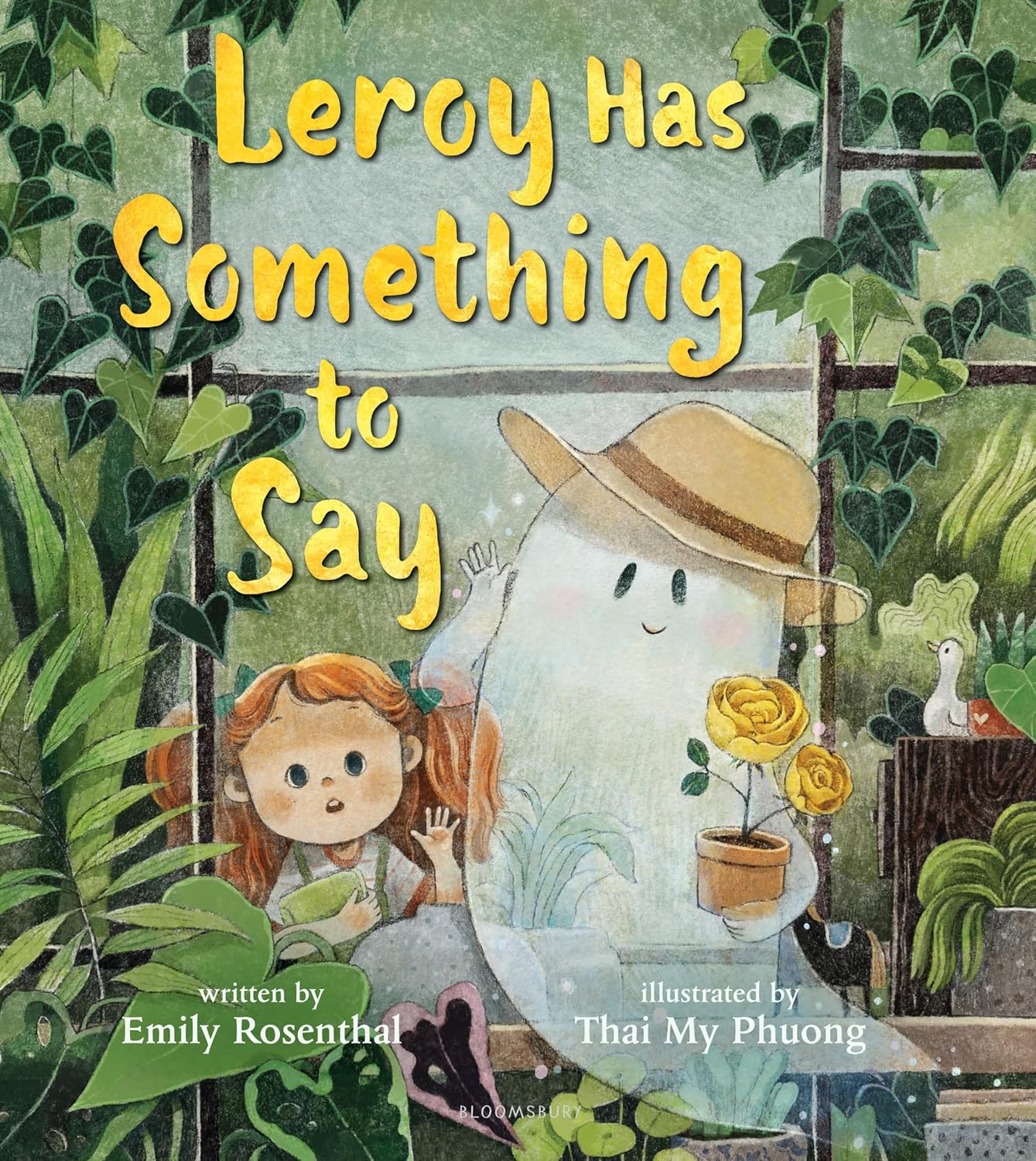
Anytime OPB covers a wordless or nearly wordless picture book, I ask myself–do I skip my part? Should the artist do the entire review? Let’s see.
The premise is rather simple. A young dancer freezes up when it’s showtime. Instead of facing the stage, she slips off and hides. It seems important to note that the girl loves dancing and has practiced, practiced, practiced. Her anxiety never comes across as stemming from being unprepared. With almost no text on the page, the storytelling has to make those feelings clear without explaining them.
The few words that appear (“time to go” and “time to hide”) carry a lot of weight. I almost read them as section or chapter headings for the emotional plotline.
The seasoned dancer who finds the girl hiding handles things so impressively. Even if this book had hundreds of words, I don’t think there’d be a pep talk or lecture. The red ribbon she gives the young girl works as emotional shorthand. That small gesture ends up carrying the story a lot farther than I imagined it could.
We watch the young dancer grow older and have a minor crisis when the ribbon is misplaced. But she steps onstage without it and performs wonderfully. This keeps the ribbon from becoming some magical talisman. And when she finds another young dancer hiding as she once did, she knows just what to do.
Passing on that ribbon is an act of kindness that can move from person to person. Yes, this is a story about confidence and performing, but it’s also about remembering who helped you along the way and how you can–and probably should–help others down the road, too.
The Ribbon is a lovely book with a quiet-but-vital message that rises above the expected “believe in yourself” angle.
4.25 out of 5 red ribbons
—Austin’s Review of the Illustrations—
It’s impossible to discuss the artwork in The Ribbon without discussing the story a bit, because author-illustrator Tessa Blackham has created a truly integrated sequential narrative spare on verbiage, but full of emotional impact. So, pardon me if I intrude on Ryan’s territory a little this time.
Blackham’s masterfully crafted layouts summarize better than words the work that goes into perfecting a craft, and becoming the best version of yourself you can be The time and effort and attention that goes into pursuing a dream, only to be faced with unexpected and seemingly insurmountable barriers in its pursuit
Through point-of-view panels, we can sense the ballerina’s fear, and her sense of becoming as she basks in the spotlight. Beautifully charming and exquisitely paced sequences cause the reader to become as attached to the ribbon as the dancer is.
The cartooning is direct and approachable, from gestural pencil-and-watercolor sketches to more rendered conté crayon and stenciled compositions full of subtext, and the same deceptively effortless movements as the dancer’s. Finding a satisfying dynamic range between the pastels chosen to represent the ballerina’s world is no small feat, but the scenes never feel muted or washed out. Each sumptuously textural page portrays stage light (and offstage light) as convincingly subtle and stark by turns. Just like ballet, the drawings seem to come alive and hover midair, untouched by gravity.
Through it all, the ribbon entwines a visual cue for the support of the masters and fellow artists from whom we learn and draw inspiration. Blackham’s ballerina learns a powerful lesson for children and the modern world about the self-discovery that happens between wishing to be able to do a thing, actually learning how, and passing it on.
Here’s a hearty OPB welcome to Joy Peskin, Senior Executive Editor at Farrar, Straus, Giroux Books for Young Readers, an imprint of Macmillan Children’s Publishing Group.
Joy and I first crossed paths this past June at the WIFYR conference in Utah, where we were both on the teaching faculty (her virtually, me in person). I caught her afternoon Zoom talk to the entire group, and about halfway through I was already mentally drafting the invitation to bring her onto OPB. Yeah, she was great.
So, here we are.
A quick bio for context: Joy has spent three decades in kidlit, moving up the editorial ranks from Editorial Assistant all the way to the top. Her stops include Puffin, Scholastic, Viking, and now FSGBYR. She edits across picture books, middle grade, and YA, and her current picture book work includes the best-selling Escargot series, written by Dashka Slater and illustrated by Sydney Hanson. She’s also mentored a whole crew of editors coming up behind her, including Kendra Levin.
RVC: You were weighing social work against publishing when you graduated. What tipped you toward books?
JP: My parents were willing to pay for what was then the Radcliffe Publishing Course, but not for a social work degree. That’s the honest answer. And I respected it. As a parent now of a 16-year-old myself, I get it—it’s not our job as parents to pay for everything our kids choose to do. We get to have a horse in the race.
RVC: As someone with two kids of my own, I say “yep.”
JP: They very graciously offered to pay for Radcliffe, and I took them up on it because I was happy to try out both paths and see which door opened first. Publishing was the door that opened.
What I ended up doing was finding a way to do both. I’ve always done social-work-adjacent work as a volunteer, and I’ve always done publishing as a paid employee. Both really matter to me.
One thing I try to convey when I mentor people is that you set yourself up for failure if you think one job is going to satisfy every professional need in your life. Same way you don’t choose one partner and expect them to satisfy every single need in your entire life. You can try. I don’t think it’s going to work.
RVC: What from the Radcliffe course actually stuck?
JP: A number of things, but the one I think about the most is the social element. The director of the program at the time was this amazing woman named Lindy Hess, who has since passed away. And as I recall, Lindy said that if we got into the program and completed it, we’d get a job—it was a job machine in 1996. Publishers recruited right out of Radcliffe. Faxes would come in with job listings and cover the entire wall by the end of the six weeks. You’d just walk up, pick one, and apply.
RVC: WOW. Stories like this just…wow.
JP: But the more enduring lesson was this: we literally had something called Sherry Hour every day. I did not drink sherry at it. I don’t know if any of the other students did. But we were meant to have a little snack and socialize with each other and with the publishing professionals who came to present that day. Lindy told us that was important, and she was right.
I think about that constantly now that we’re all working from home or hybrid. The proximity thing, learning by osmosis—that’s diminished. So the social piece has to be much more intentional now. Junior people have to be more curious and inquisitive. Senior people have to be more deliberate about teaching.
RVC: Amen to that. And speaking of learning from senior people…your first job in New York was at Puffin, and you clearly admired your boss there. What did that early apprentice period actually look like day-to-day?
JP: I remember starting and my boss saying, “Oh my gosh, I’m so glad you’re here—I have a project for you.”
I was like, “I’m going to get a project! An important project! It’s going to be creative!”
And then it turned out the project was: it’s winter, she’s organizing her Bologna schedule, and I need to make a grid and send out a million faxes. This was the olden days. So I had to learn how to use a fax machine, dial internationally, offer people slots, move them around the grid.
That’s the honest picture of starting out. In the beginning, your work is very administrative. Then it slides into a hybrid where you’re assisting some and doing some of your own books. Then when you move up to editor, most people aren’t assisting anymore—you’re doing your own work. At that level, I was at Scholastic, where I got projects handed down from senior people who acquired them and then dropped them onto us as if from the heavens. I didn’t start acquiring my own books until I moved to Viking as a senior editor. I was about 30.
RVC: But you got to run the department at FSG for about 13 years, which sounds pretty terrific.
JP: The big change when I became Editorial Director in 2012 was that I was acquiring my own books, editing my own books, and managing a team. That was 13 years. Now as Senior Executive Editor, I’m back to just acquiring and editing my own stuff and managing an assistant, which honestly is a nice reset. I love the mentorship piece and I still do plenty of that, but there’s something clarifying about being able to focus on just the editorial work itself again.
RVC: Let’s talk picture books specifically. You’ve worked on the Sparkle series with Amy Young, an author-illustrator. What’s that dynamic like compared to when you’ve got a separate author and illustrator on a project?
JP: I love working with Amy. I worked with Amy years ago when I was at Penguin, and then we did the Sparkle books together at FSG. One reason I love working with author-illustrators—and I’ll admit this is a little selfish—is that it cuts out some of the approvals process. If you’re both the author and the artist, I know you approve the art because you made it! When there’s a separate author, obviously we want them happy with the art too, so we run every stage by them. Happy to do that. Always want to do that. But when it’s a one-stop shop, it’s just easier.
I also love that author-illustrators are using both parts of their brain at once. They’re picturing how the art looks and tailoring the text to that. There’s a unity of creative vision.
RVC: You’ve said the freshest picture books bring something new to evergreen topics—first day of school, new sibling, bedtime. What’s a recent example that made you go, “oh, THAT’s how you do this topic differently”?
JP: by Bunmi Laditan, illustrated by Tom Knight. Absolutely perfect example. The ground floor of the story is the classic thing—your child is going from a crib or your bed into their own big bed. Every parent has some version of that conversation. Sometimes kids are excited, sometimes not. It’s a turning point in most children’s lives.
JP: Bunmi took that common thing and totally inverted it in a genius way. Instead of the parents sitting the little girl down to say, “You’re a big girl now, time for a big bed,” she flips it so that the little girl goes to the dad and is like, “Dad, we need to have a talk. It’s been the three of us in this bed—you, me, and Mom. There’s not room for you anymore. This is your own big bed, which will actually be a camping cot, so I can be with Mommy.”
Genius. We all get it, but I’d never seen it done that way before.
RVC: Agree. But back to mentoring. You’ve been on both ends of the equation. What makes it work in publishing specifically?
JP: Publishing is an old-fashioned apprenticeship. You don’t need a graduate degree to do it—some people have one, and that’s fine, but you don’t need one. You can’t just jump into a surgical suite and start cutting people up without a medical degree. But you can, in fact, jump into publishing with just a bachelor’s and learn the whole thing on the job. So mentorship has to be baked in.
Some people are more inclined to receive it or give it, based on a lot of factors. For me, I’ve been really lucky to identify people I wanted to learn from. Who you end up reporting to can really determine your path. But sometimes it’s not even your boss—it’s another senior person in the group.
RVC: Such a great point.
JP: What worries me now is that we’ve lost so much of the proximity piece. When I started, I sat in a cubicle right outside my boss’s office. I listened to everything she said because she was right there. That’s how you learn by osmosis. Now we don’t have that. So we have to be much more intentional—senior people have to actively teach, and junior people have to be genuinely curious.
AI is going to make this worse if we let it. The question with AI is: is it going to make us more human or less human? It could make us better at connecting. But right now I think it’s short-circuiting our brains. We can’t forget how to be people.
RVC: Kendra Levin (VP and Editorial Director at Simon & Schuster Books for Young Readers) has publicly credited you as a mentor. From your side of that mentorship, what did you spot in her early?
JP: Kendra is my heart. I was texting with her today. I met her when she was 19—and because everybody stays the age they were when I met them forever, in my mind she’s still probably 19, although she’s not.
David Levithan had hired her as an intern at Scholastic, and she came to work in my office on Fridays. I had this weird office that had been a copy room, no windows, but I had a long desk, so David asked if she could sit with me. And we just hit it off right away. She knows I’ve told this story a million times, but sometimes I’d come in cranky—I was in a relationship at the time with a lot of ups and downs—and Kendra’s presence would just pry me out of whatever mood I was in. She was warm and delightful and smart and great at the work.
RVC: Who doesn’t love people like that?
JP: So first I connected with her as a human. Then when I moved to Viking and brought her over as my assistant, she was just so impressive at the work. And what really stood out was this: we’d have a check-in and I and the other folks she reported to would be like, “You’re amazing, you’re the freaking best.” And she’d say, “Great. Are there specific ways I could grow and do better?”
She always wanted the critique. She had genuine passion for the work and this deep desire to keep learning. She never resisted the praise, but she wasn’t satisfied with just praise. That combination told me everything.
RVC: Now I want to hang out and work with Kendra. But back to you and your career–FSG has a clear identity as a publisher. In the picture book space specifically, how do you and your team define what feels like an FSG book versus what belongs elsewhere?
JP: What I really value about FSG—and it’s been this way from the start, even though I’m on my fourth boss over the years—is that the books I do are appreciated.
I brought something to acquisitions recently and people were like, “This is such a Joy Book.” And I felt very seen. Because a book I’m drawn to isn’t a specific genre—it’s a sensibility. It’s what’s baked into who I am and what I care about. And the house gets that. I don’t feel pressure to chase things outside my range.
RVC:…thinking hard about what’s a Ryan Book…hmmm…
JP: For picture books specifically, the example I’d hold up is the Escargot series by Dashka Slater. It came in through her agent, Erin Murphy, as this quirky little one-off. A snail breaking the fourth wall, trying to get to the end of the book, moving slowly. Voicey and funny. It came from a really organic place for Dashka—she’d brought a snail puppet to author visits for her other books and just started talking in this snail voice as a gimmick, and kids loved it. So the book grew out of that.
JP: I like an organic build. I tend to be much more comfortable with projects that start as some unusual thing I liked and then other people liked it too. Not a too-big-to-fail thing where somebody spent $6 billion on a 40-book series and then everyone’s job is to like it, so you can’t get sincere answers about it. That doesn’t create good art.
Escargot just did its thing, and now we’re building a 20-book series. That’s the kind of thing I love.
RVC: As do tons of readers, too. But let’s shift to talking about the WIFYR (Writing and Illustrating for Young Readers) conference now, since that’s where I “met” you. Sort of. You had a room full of writers hanging onto your every word despite you Zooming in. What’s the piece of advice you find yourself giving—both to writers and to the editors on your team?
JP: “Make it work.” That’s straight from Tim Gunn on Project Runway, which I’m sure my kids have watched too many episodes of.
RVC: Me too!
JP: Tim would go up to a designer working on some assignment—make a dress out of stuff you found in a dumpster, whatever—and he’d say, “Tell me about this.” And then he might say something like, “I’m concerned, I don’t really get what you’re doing here…” But if the person loved it, he pushed them to, you know, make it work.
What I took that to mean is: All I can do is tell you if it’s working for me. If you give someone that feedback, they’ll either say, “Yeah, I agree, this is not coming together”—and then great, we’re on the same page. Or they’ll say, “No, I really love this.” And then it’s like: Okay, it’s not working now. If you love it, let’s find a way to make it work. If you can’t find a way, do something else.
I give some version of that advice all the time. “It’s not working for me. That doesn’t mean you can’t make it work. I don’t know exactly how, or maybe I have a couple ideas too. But—make it work.”
RVC: Preparing for a conference like WIFYR: how does that compare to coaching an author through a manuscript in-house?
JP: I take WIFYR seriously. What’s heartbreaking about the industry is that not every organization out there is ethical. Some places make promises they can’t keep—pay us a thousand bucks, come to this workshop for the weekend, we’ll get you published. Not possible.
WIFYR is the opposite. It’s best in class. So when I’m invited, I really prepare.
RVC: What an endorsement!
JP: For the one-on-one critiques, I’ve drawn a lot from my professional coaching training, which I did at Rutgers—the co-active approach. You meet with the person, you listen, and then you basically ask them: What would feel like progress to you? What is it you want? Because not everybody wants the same thing. Some people want kind of what you’d expect—what did you think, what stood out, what’s not working. But some people are basically like, “Just tell me: Do I suck at this? Should I never do this again?”
So I don’t go in assuming what somebody wants. My goal is to be as clear and kind as possible while taking into account what the person is actually there for. That approach translates directly to the in-house editing work, too.
RVC: Best thing a kid reader ever said about a book you worked on?
JP: This is easy. The 57 Bus by Dashka Slater—the same author as Escargot, a very multi-talented writer. The book comes out for its 10-year anniversary in Fall 2027. It’s a nonfiction YA about two teens whose paths cross when one of them—Richard, a Black teenage boy from a disadvantaged background—sets the skirt of the other teen, a white middle-class transgender youth, on fire on a bus in Northern California. The person whose skirt was set on fire is injured but recovers. It’s about that moment, but it’s also about what came before and after, and about race, class, gender, forgiveness, repentance, paying your debt.
Early on we got a letter from a reader—a white middle-class teenage boy—who said, essentially, that he’d gone into the book expecting to have a negative reaction to Richard. Like, how could you do what Richard did, how could you harm someone in that way? But he came out realizing he could have been Richard. Because Richard is essentially egged on by his friends to do a dumb thing. And I have a teenage boy living in my house. They can be stupid, God bless. They’re very peer-motivated to do silly things because their friends think it’ll be funny. Richard thought it would just be a little spark. He didn’t expect the skirt to go up in flames.
That “there but for the grace of God go I” moment—a book making a teenager have that realization? That’s the whole thing right there. That’s why we do it.
RVC: Great answer, Joy. Let’s ask one more to wrap up this part of the interview. What’s a question no one’s ever asked you in an interview that you wish they would?
JP: “What’s the one that got away?”
RVC: What’s the answer?
JP: It’s Love, Aubrey by Suzanne LaFleur. It was a middle-grade novel, published in 2009, I think. I bid on it when I was at Viking. I still think about it. It was just the most stunning story about love and loss and recovery.
RVC: Alright, Joy—time for the SPEEDROUND. Zippy-quick questions, snappy-fast answers, please. Ready?
JP: Ready.
RVC: Sparkle the Unicorn but make it a cocktail. What’s in it?
JP: Oh, that’s so fun. I’m not great at cocktails—I’m a gin and tonic or whiskey on the rocks person—but okay. It would be one of those cocktails that’s a little blue and a little yellow. A little bubbly and froofy. It would definitely have a cute little toothpick in it with a unicorn on top. Fruity but light. Very summery.
RVC: If your inbox had a theme song, what is it?
JP: I can’t quite land on a song, but I have a visual, which is: a leaf pile, and I’m raking, but the leaves keep falling. So maybe “Hazy Shade of Winter”? Something seasonal, something fall. But cheerful. There are no grudges. I’m just always in there raking.
RVC: A picture book from the past year that deserves more buzz?
JP: Finding Forgiveness by Rebecca Gardyn Levington, illustrated by Diana Mayo. It got some very nice notice—it was a Sydney Taylor Notable—but I absolutely love it, and I think it deserves more. It’s a perfect example of what I always talk about with picture books: three points of entry.
One, it’s Jewish-themed—and specifically about Rosh Hashanah, which is underrepresented (bonus points for not being about Hanukkah or the Holocaust, no offense to either).
Two, it’s a sister story, and I love a good sister story.
Three, it’s a conflict story—the sisters have gotten into a fight the night before Rosh Hashanah and have to make up.
Plus there’s beautiful back matter about the tradition of Tashlich, and about how to make a good apology. Because we make kids say they’re sorry all the time—you hit your brother, you broke your sister’s necklace, say you’re sorry. But what does it actually mean to make a repair? To understand the difference between impact and intention? That book gets at all of it.
RVC: The single most useful habit an editorial assistant can build in their first six months?
JP: I have a new EA right now—Cassandra Gutterman-Johns (shout out! she’s crushing it)—and one of the things she’s doing so well is asking questions designed to help her understand me, and the other editor she supports, and how we each work. Not just “How do I do this task.” She’s taking over a tracking system from my previous assistant, and she said, “If it’s okay with you, I’m going to update it. But first I want to know what parts of it are useful to you, because I don’t want to change those.” I was like, I love you.
Not romantically. HR, relax.
But that’s such a good question. She’s not upending anything on day one. She’s learning the job first, then thinking about how she can tweak it for her own workflow and for what her bosses need. That’s the whole game.
RVC: So you’ve got Pablo the sleepy cat, Pixie the fluffy guinea pig, and Clemmie the camera-shy guinea pig. Here’s the ultimate question. Guinea pigs–great pet or the GREATEST pet?
JP: That’s the hardest question you’ve asked me, Ryan.
Pablo is a prince among cats. But I feel like the cat-plus-guinea-pig combination is the lifestyle I want to have until I’m dead. Guinea pigs are the unsung heroes of pets. I bring my pigs outside to graze in the park, as anyone would, and when I went to our local town festival—which is called, I’m not kidding you, Maplewoodstock—I brought them out in their little outdoor pen, and I met probably 200 people of all ages and backgrounds who went absolutely out of their freaking minds for the pigs. They make people happy. They bring people together.
Everybody should get at least two—they’re herd animals. And they’re wasted on children. Do not throw them in a classroom. Be an adult. Get a couple of guinea pigs.
Book description from Goodreads: “The Pigeon is about to get SCHOOLED. Do YOU think he should go? Why does the Pigeon have to go to school? He already knows everything! Well … almost everything. And what if he doesn’t like it? What if the teacher doesn’t like him? I mean, what if he learns TOOMUCH!?!”
What do you notice about the Pigeon’s face and body on the cover?
Why do you think the word HAS is in capital letters?
What do you think the Pigeon believes school will be like?
If you’ve met the Pigeon in another book, what usually happens when someone tells him he has to do something?
What would you say to the Pigeon if you were trying to convince him to give school a chance?
What questions would you like to ask the author before reading the book?
After Reading–Now that you’ve read the story:
The Pigeon has plenty of reasons for avoiding school. Which one made you laugh the most?
Which of his worries felt less silly and more real?
At one point, the Pigeon finally admits how he feels. Why do you think it takes him so long to say it?
Look back at the pictures. How does Mo Willems make the Pigeon appear different when he’s confident, worried, scared, or excited?
What does the Pigeon begin to realize about school that he probably hadn’t considered before?
Why does seeing the school bus change his mind so quickly?
Would you recommend this book to a friend? Why or why not?
The Excuse Escalator: The Pigeon is VERY good at coming up with reasons to not do something. Pick something you don’t want to do (maybe taking a bath, mowing the lawn, eating broccoli, or going to bed). Then write three excuses for getting out of it. Make each one bigger and more ridiculous. Which excuse would impress the Pigeon most?
Funny Excuse or Real Worry?: Divide a piece of paper into two equal sides: FUNNYEXCUSE and REALWORRY. Look back through the book and list the Pigeon’s complaints on the appropriate side. Which side has more? Do any belong somewhere in the middle? Think or talk about why.
Pigeon Times Two: Willems alters how the Pigeon looks (posture, eye, and wings) to reveal how he feels. Draw your own version of the Pigeon twice. In one picture, make him super confident. In the other, make him nervous or scared. See how much you can show without writing any words.
Pigeon’s First-Day Survival Kit: So the Pigeon’s heading to school after all. Fill his backpack with three or four things that might make his first day easier, or at least more fun. Draw each item then explain why you packed it.
Build the Pigeon Bus: That yellow bus turns out to be VERY important in the story. Design a school bus that’s specially made for the Pigeon. What would a pigeon need that an ordinary school bus might not already have? Add special features and label them. (Seed dispenser? Wing stretching room? Emergency hot-dog dispenser? You decide.)
Books, Books, and More Books!: Check out these other picture books about schools. Which have you already read? Which would you pick up first?
I first met Suzy the way I met so many OPB interview folks—via her books. In this case, it was Animals in Pants. I saw it at my library one day and picked it up because…well…it had a terrific trifecta (animals, pants, poetry!).
After some digging, I learned that Suzy’s the author of Animals in Pants (Abrams/Cameron Kids, illustrated by Kristen & Kevin Howdeshell) and Dinos that Drive (Tundra Books, illustrated by Dustin Harbin), with four more picture books arriving in 2027. Her poems have appeared everywhere from Highlights and Cricket to anthologies from Bloomsbury, DK, and Macmillan.
I’m also a fan of authors who have super-quotable things on their website, like this: “When I’m not reading or writing, I enjoy taking pictures, watching movies, and sliding around my apartment in socks, singing whatever ridiculous songs pop into my head. I live in New York with my sweet husband and our spicy cat.”
Intrigued, right? Let’s learn even more about Suzy right now.
RVC: So you grew up in Massachusetts making up weird stories on long car rides. What kinds of stories?
SL: There was something about the boredom of sitting in the car that would send me on these unhinged streams of consciousness. If I had a stuffed animal with me, he’d have a whole epic backstory. If I didn’t, I’d just anthropomorphize something else—a paper clip, whatever. For a while, I kept this little plastic green clown in one of our car’s empty ashtrays, and what a personality that guy had! Every car ride was an opportunity to workshop his stand-up routine. Then there were the fake ads, the jingles, the (embarrassing) raps. So many made-up songs! Sometimes I’d just stare out the window, singing random lyrics until my little sister screamed, “STOP, your voice SUCKS.”
I see now that I was almost writing. Almost. I wish I’d put some of it down on paper, but it never crossed my mind. Back then, “writing” meant doing a horrible book report for school, while this was just having fun, something to kill time between point A and point B. I didn’t realize it could count as something real.
RVC: Wow, what a way to start this interview. Thanks for that. Now, you were an actor before you were officially a writer. What stuck with you from that first career?
SL: My favorite parts of acting and writing have always been one and the same: diving into a character, finding their voice! The freedom of it! The sense of security, too. All the self-consciousness that comes with being myself falls away when I ask “What if?” and jump into someone else’s shoes. It makes me braver, counterintuitively more me.
RVC: You’ve said Shel Silverstein poems felt like “a thrilling gift” when you were a kid. Was there a specific one that flipped the switch?
SL: You know, I don’t think there was a specific poem that flipped a switch. I just remember being unreasonably psyched whenever a teacher would read a few of his poems in class. The conversational tone, the irreverence, the rhythm, the purposeful language that still managed to sound loose, the line drawings…there was a radical coolness to Shel Silverstein’s work that spoke to me then and still speaks to me now. Almost like a nudge to go ahead and be weird already.
RVC: Shel was awesome, no doubt about it. Back to you and your career. Before you were publishing your own picture books, you were placing poems in Highlights, Cricket, Ladybug—the whole magazine map. How much of your craft came from that grind?
SL: That grind was like grad school or something! Starting out, I looked at PB authors I knew and admired, like Diana Murray and Carrie Finison, with their long lists of magazine credits, and I saw a path forward. I saw achievable goals, so I wrote and submitted poems nonstop.
RVC: Love this.
SL: Of course, it wasn’t easy to sell to magazines. The competition was (and still is) fierce. I had to be strict, focusing on craft: clear imagery, natural-sounding phrasing, strong word choice, flawless meter, kid-friendly voice, sharp punch lines! If even a single word sounded off, the poem wasn’t ready yet. My critique partners put me through the wringer, and that’s why I started to see results. It’s how I got better at this!
RVC: Absolutely. Now I’ve been told that Animals in Pants started with a Brooklyn class prompt and a cat in pants. What was it about the pants that wouldn’t let you go?
SL: Strange mash-ups make for satisfying prompts. After I wrote that first cat-in-pants poem, I realized the possibilities were kind of endless. I jotted down a list of animals and a list of pants styles, then made some matches, taking the inherently nutty premise and applying good old-fashioned common sense—logistics! For example, what type of pants would best suit a monkey’s lifestyle? What problems might a manatee face while wearing denim? How would certain elephant traits influence their garment maintenance?
RVC: Ah, COMEON…I’ll be pondering these all evening now.…
SL: It was so fun that I mostly ignored my trepidations about no one in publishing ever buying poetry collections and kept going.
RVC: Cameron Kids acquired the book with a note that it needed more of an arc. What did retrofitting structure onto a finished collection teach you?
SL: First off, it taught me the power of intros and outros in this sort of narrowly focused collection, to get the ball rolling and give the work shape. Plus there’s a lot you can do just by being intentional with the order of your poems, creating the hint of an arc if not a traditional story arc—city-to-country, day-to-night, cold-to-hot, that sort of thing. Even the most subtle structure can give the book momentum, pushing the reader forward, letting them know they’re in good hands and not about to fall off some literary cliff.
RVC: You clearly applied those lessons early with Dinos that Drive. Was there a moment during drafting where you thought, “Oh, that’s what my editor meant last time”?
SL: Oh, right at the beginning! You can be sure I wrote my intro poem first this time! As opposed to tearing my hair out, writing five different potential intros, praying that one could be slotted in after the fact! Ugh!
RVC: It’s pretty clear that you’re passionate about meter. And I mean not merely counting syllables, but ACTUAL meter. What’s the misconception about meter that you correct most often?
SL: Ooh. Deep breaths. I could rant and rave on this topic for DAYS. I won’t, but I could…
RVC: I’m okay with whatever!
SL: I’d say the trickiest thing about meter is convincing smart, talented people who are only starting to write in rhyme that they can’t just “wing it” because they’re smart and talented. Meter isn’t easy; it isn’t counting syllables; and if you ask me, when it comes to rhyming verse, it isn’t optional.
RVC: I’m going to jump in here and say…YES! Please continue.
SL: I beg rhymers to avoid doing what I did, which was wasting at least a year thinking I could wing it, then wondering why no one was buying what I was selling. Even if you’ve got the world’s best ear, it takes a good class to learn how to do it properly, then tons of practice to learn how to do it well.
RVC: You’ve said humor is about surprise, but also that you’re not the class clown in real life. What lets you loosen up on the page?
SL: It probably goes back to that sense of security I mentioned earlier. When I’m writing, I don’t have to be myself. I can get a little wild and crazy. I don’t have to be overthink‑y, worrying about every choice for fear of making a mistake—sounding stupid, or rude, or inauthentic. What’s the worst that’ll happen if I make a mistake while writing? I’ll have to hit delete too many times? That’s a risk I can handle.
RVC: You already said it–rhyming collections are famously hard to sell. What finally cracked the door open for you, and what would you tell rhymers still stuck on submission?
SL: Yes, they’re ridiculously hard to sell, which is why I feel like a total goof whenever I write one. But hey, they sometimes sell! Look at my first two books! What finally cracked the door open for Animals in Pants, after years and years of nothing, was meeting my agent, Rachel Orr.
SL: She just got it from the start, and was willing to take a chance that someone else would get it, too. And Amy Novesky was the editor who wound up being that someone. So in other words, two wonderful people and a bit of good luck!
RVC: And here’s the OPB interview with Amy! Yeah, the kidlit world’s smaller than many might think. Speaking of which–remind me, who’s your editor at Tundra for Dinos?
SL: That’s Margot Blankier–another wonderful person who’s helped make my poetry-collection dreams come true.
RVC: Sounds like it. Now, what would you say to fellow rhymers working on a collection?
SL: First off, you need a killer concept, something kids are going to love. I know a lot of us look at collections by, say, Shel Silverstein and think maybe ours can also cover a broad range of topics, but I’ve found that very few poets get away with that these days, unless they’re a big name and/or celebrity (eye roll). Narrower topics seem to sell more easily, probably because publishers know how they can market them. Of course your meter has to be tight, your rhymes fresh. Your poems should vary in sound while remaining pretty consistent in tone—meaning if you’re writing a funny rhyming collection, maybe don’t include that dark poem about death, even if it’s really good?
And while you’re waiting for those collections to sell, keep subbing one-off poems to magazines and anthologies! Agents and editors like to see a few of those credits. I think it makes them feel more confident that you know what you’re doing.
RVC: Speaking of things that can happen with poems beyond your own collections, “Iguano-Gone” became an actual country song. How did that happen, and can we hear it anywhere?
SL: For a long time I’ve been fascinated by the thin line between children’s poetry and song lyrics, probably because I secretly dream of being a lyricist although I’m not a musician. When I look at Shel Silverstein, or Sandra Boynton, or Cece Bell, all who’ve more than dipped a toe into the songwriting world, I feel empowered. So when I realized nothing was stopping me from writing a poem that’s a fake song in Dinos that Drive, I went for it!
And then “Iguano-Gone” became a real song, woohoo! Long story short, my sister and her partner, who are both in the music industry in Montréal, introduced me to a friend of theirs, an awesome country artist named Wood Andrews. He agreed to work with me, taking my poem and adding music and performance. He crushed it. We wound up with a really cute song! You can take a listen here.
RVC: You co-taught the Lyrical Language Lab with Renée LaTulippe. What’s the single most useful revision habit you’d hand a rhyming writer today?
SL: Yes, this fall I’m actually co-teaching the Lyrical Language Lab for the third time! What an honor. I took the class back in 2014, and it was a complete game-changer for me. I’m not exaggerating when I say everything I’ve achieved in my writing career happened as a direct result of that class. I’ve basically told Renée I owe her for LIFE.
RVC: Very cool.
SL: I think it’s important for rhymers to scan their work, actually writing out those little scansion marks, particularly when they’re just starting out; it helps to train your ear and make meter part of your muscle memory. And remember to put your manuscript down for a while, at least overnight, then read it aloud the next day. That little break always seems to expose stumbly bits that sounded smooth the night before! It’s very annoying, but helpful!
RVC: Since COVID, I like to ask people a health and wellness question. What’s your go-to for keeping yourself steady when a deadline stretch (or a launch, or a rejection) starts messing with you?
SL: I struggled for years—first as an actor, then as a writer. We’re talking far too many rejections for one lifetime, brutal on my self-esteem. I’d wonder if I was fooling myself, chasing pipe dreams. But there was one weirdly good thing that came out of that, which was learning to be resilient. Nothing gets me out of a rejection funk more than trying the next thing—well, that and complaining. Complaining to my writing friends feels healthy, because then they complain back, and suddenly it’s a full-on vent sesh and I’m kind of enjoying myself?
I will add that nowadays, it’s nearly impossible for me to take my wins for granted. I’m not skipping around like Pollyanna, but even when I’m venting to my crit group about this or that rejection, part of me is still thinking, “YES! I’m finally in a position where I get to complain about this stuff!” There’s an undeniable baseline joy that comes after years of ugh, now that things are (occasionally) working out.
RVC: Last question for this part of the interview. In all your experience in the kidlit writing and publishing world, what has most surprised you?
SL: I think I’m most surprised by how the work allows me to keep growing into myself, discovering new branches of who I can be, while also bringing me closer to who I was as a kid—you know, rapping about snack food in the car and stuff. Writing’s allowed me to reconsider the parts of myself that I always thought were too weird, and see them now as they really are—my greatest strengths. I’m surprised by how healing it’s all been.
RVC: Speed Round time, Suzy. Quick questions, fizzy-fast answers. Ready?
SL: Yeah. Bring it!
RVC: Best milkshake flavor?
SL: Coffee. I grew up within walking distance of a Brigham’s in Wellesley, MA, and man, that ice cream shop knew what to do. It was like sucking a solid pint of coffee ice cream through a straw. Oh, I’m supposed to be giving speedy answers, right? Hmm. Maybe the next one.
RVC: Guacamole, math, or small talk—which is marginally less awful?
SL: Ha! Surprisingly, small talk. I don’t love small talk, but I don’t love awkward silences more, so I’ve gotten fairly adept at chatting it up when required. I’ve met people at parties who probably took me for an extrovert, never suspecting I later went home and passed out from sheer social exhaustion. Okay, the next answer will be speedy, I swear.
RVC: Which Who Wants to Be a Millionaire? question got you?
SL: THANKYOU for bringing it up. I’ve been fuming over this stupid question for 17 years! Let’s air it out:
The African Charrier coffee plant produces coffee with what unique property?
‘Ask the Expert’ lifeline used
⬥ A: Caffeine-free
⬥ B: Protein-rich
⬥ C: Odorless
⬥ D: Naturally sweetened
So, Ryan, have YOU ever heard of African Charrier coffee? Because no one else I’ve talked to has, including my “Ask the Expert”! Not that I’m bitter or anything. At that point I quit and took the cash.
RVC: Which Dark Crystal character would you least want as a critique partner?
This is Fizzgig!
SL: Fizzgig! I’m guessing he’d be at least as unhelpful as his namesake (my cat, Fizzy), especially at mealtimes.
RVC: One piece of advice you’d give your pre-Animals in Pants self?
SL: If you’re doing something that makes you feel like you’re constantly banging your head against a wall, pivot! Pivoting is not a failure! The only failure would be sticking to something you hate just because you think you need to be good at everything. Take a leap and dare to find the thing you actually enjoy doing!
RVC: What makes a picture book worth returning to, again and again?
SL: Art and heart! No, I didn’t mean for that to rhyme, it just happened.
RVC: LOL. Thanks so much, Suzy!
SL: Wow, Ryan, these questions were awesome. You did your research. You’re like the Sean Evans of kidlit interviewers! Thanks so much!
Another month, another set of five-word reviews. All of these are picture books I somehow missed early this year…but they’re new to me so I say “Fair game!”
There’s also an unexpected mud theme happening this month.
September’s just around the corner, and that means we’ve still got a few long afternoons left. So it seems like a fine time to dig out the cardboard, masking tape, pipe cleaners, markers, and whatever else you’ve got in the craft drawer and then..unleash the kiddos.
To provide inspiration for a Maker Monday Afternoon (any day will do, though!), here are a dozen picture books that celebrate and champion kids who build, construct, tinker, test, dream, and occasionally make an awesome mess.
If one of your faves somehow didn’t make this totally subjective list, add it to the comments.
**Since so many teachers visit OPB, I’m adding a “Good for” list for each title, so it’s super easy to know how someone might use these books in the classroom.
From the publisher: “Ada has always been endlessly curious. Even when her fact-finding missions and elaborate scientific experiments don’t go as planned, Ada learns the value of thinking through problems and continuing to stay curious.”
32 pages
Reading Age: 3–7 years
Good for: scientific questions, curiosity, observation, perseverance, women-in-STEM conversations
From Goodreads: “As one artist incorporates accidental splotches, spots, and misshapen things into her art, she transforms her piece in quirky and unexpected ways, taking readers on a journey through her process.”
48 pages
Reading Age: 4–8 years
Good for: art class, creative confidence, revision, turning mistakes into opportunities
From Goodreads: “A STEAM-centered, adorably illustrated picture book about Meg, a brilliant and creative boxitect who creates extraordinary things out of ordinary cardboard boxes.”
40 pages
Reading Age: 3–7 years
Good for: cardboard engineering, makerspace projects, design challenges, teamwork
From Goodreads: “While out exploring one day, a little boy named Liam discovers a struggling garden and decides to take care of it. As time passes, the garden spreads throughout the dark, gray city, transforming it into a lush, green world.”
40 pages
Reading Age: 3–6 years
Good for: garden projects, environmental stewardship, urban greening, community change
From Goodreads: “Art class is over, but Vashti is sitting glued to her chair in front of a blank piece of paper. The words of her teacher are a gentle invitation to express herself. But Vashti can’t draw — she’s no artist. To prove her point, Vashti jabs at a blank sheet of paper to make an unremarkable and angry mark. ‘There!’ she says.”
32 pages
Reading Age: 4–8 years
Good for: art class, creative confidence, first marks, International Dot Day
From Goodreads: “A collection of illustrations, concrete poetry, and photographs that shows how young children’s constructions, created as they play, are reflected in notable works of architecture from around the world.”
40 pages
Reading Age: 4–10 years
Good for: architecture, building units, concrete poetry, comparing kid-made structures to real buildings
From Goodreads: “Each of us, from the day we’re born, is accompanied by a special companion–the Yet. Can’t tie your shoes? Yet! Can’t ride a bike? Yet! Can’t play the bassoon? Don’t worry, Yet is there to help you out.”
32 pages
Reading Age: 5–8 years
Good for: growth mindset, trying again, frustration tolerance, SEL conversations
From Goodreads: “In the mid-1950s, legendary avant-garde composer John Cage and artist Lois Long created a truly marvelous object. Part artist’s book, part cookbook, and part children’s book, Mud Book is a spirited, if not satirical, take on almost every child’s first attempt at cooking and making. Through the humble mud pie—add dirt and water!—Cage and Long encourage children to explore their imagination and to get their hands dirty, and they offer this ‘Mud pies are to make and look at, not to eat.’ ”
36 pages
Reading Age: 3–5 years
Good for: sensory play, outdoor making, process art, messy creativity
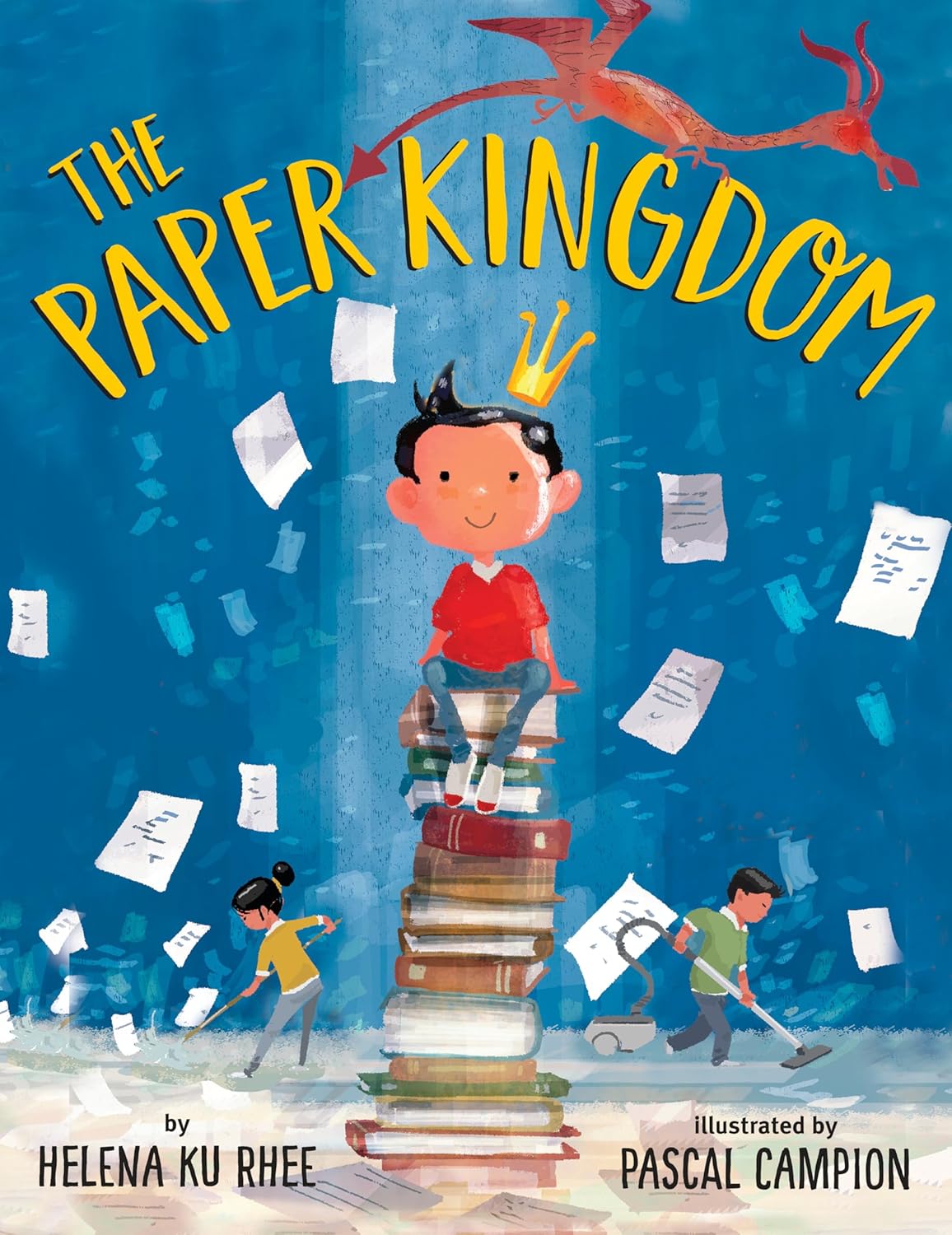
From Goodreads: “When the babysitter is unable to come, Daniel is woken out of bed and joins his parents as they head downtown for their jobs as nighttime office cleaners. But the story is about more than brooms, mops, and vacuums. Mama and Papa turn the deserted office building into a magnificent kingdom filled with paper. Then they weave a fantasy of dragons and kings to further engage their reluctant companion–and even encourage him to one day be the king of a paper kingdom.”
40 pages
Reading Age: 3–7 years
Good for: imaginative play, paper crafts, family storytelling, transforming ordinary spaces
From Goodreads: “This is the story of one brilliant idea and the child who helps to bring it into the world. As the child’s confidence grows, so does the idea itself. And then, one day, something amazing happens. This is a story for anyone, at any age, who’s ever had an idea that seemed a little too big, too odd, too difficult. It’s a story to inspire you to welcome that idea, to give it some space to grow, and to see what happens next. Because your idea isn’t going anywhere. In fact, it’s just getting started.”
44 pages
Reading Age: 5–8 years
Good for: brainstorming, creative courage, project launches, nurturing big ideas
From Goodreads: “If you give a child a box, who can tell what will happen next? It may become a library or a boat. It could set the scene for a fairy tale or a wild expedition. The most wonderful thing is its seemingly endless capacity for magical adventure, a feature imaginatively captured in cardboardesque art by Chris Sheban and rhythmically celebrated in this poetic tribute by renowned children’s author Jane Yolen.”
32 pages
Reading Age: 6–8 years
Good for: cardboard builds, imaginative play, loose-parts play, poetic read-alouds
From Goodreads: “For young makers and artists, brief, lively poems illustrated by a NYT bestselling duo celebrate the pleasures of working with your hands. Building, baking, folding, drawing, shaping … making something with your own hands is a special, personal experience. Taking an idea from your imagination and turning it into something real is satisfying and makes the maker proud.”
32 pages
Reading Age: 4–7 years
Good for: maker activities, poetry, art rooms, hands-on creativity
Cookie Consent
We use cookies to improve your experience on our site. By using our site, you consent to cookies.
Contains information related to marketing campaigns of the user. These are shared with Google AdWords / Google Ads when the Google Ads and Google Analytics accounts are linked together.
90 days
__utma
ID used to identify users and sessions
2 years after last activity
__utmt
Used to monitor number of Google Analytics server requests
10 minutes
__utmb
Used to distinguish new sessions and visits. This cookie is set when the GA.js javascript library is loaded and there is no existing __utmb cookie. The cookie is updated every time data is sent to the Google Analytics server.
30 minutes after last activity
__utmc
Used only with old Urchin versions of Google Analytics and not with GA.js. Was used to distinguish between new sessions and visits at the end of a session.
End of session (browser)
__utmz
Contains information about the traffic source or campaign that directed user to the website. The cookie is set when the GA.js javascript is loaded and updated when data is sent to the Google Anaytics server
6 months after last activity
__utmv
Contains custom information set by the web developer via the _setCustomVar method in Google Analytics. This cookie is updated every time new data is sent to the Google Analytics server.
2 years after last activity
__utmx
Used to determine whether a user is included in an A / B or Multivariate test.
18 months
_ga
ID used to identify users
2 years
_gali
Used by Google Analytics to determine which links on a page are being clicked
30 seconds
_ga_
ID used to identify users
2 years
_gid
ID used to identify users for 24 hours after last activity
24 hours
_gat
Used to monitor number of Google Analytics server requests when using Google Tag Manager
1 minute
Marketing cookies are used to follow visitors to websites. The intention is to show ads that are relevant and engaging to the individual user.
AddToAny provides share and follow buttons that let visitors post your pages to social networks, messaging apps, and bookmarking services.


 The Ribbon


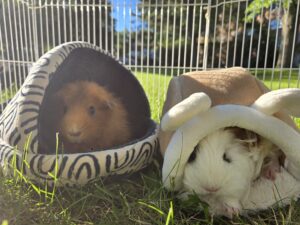 Everybody should get at least two—they’re herd animals. And they’re wasted on children. Do not throw them in a classroom. Be an adult. Get a couple of guinea pigs.
 The Pigeon


 I first met Suzy the way I met so many